
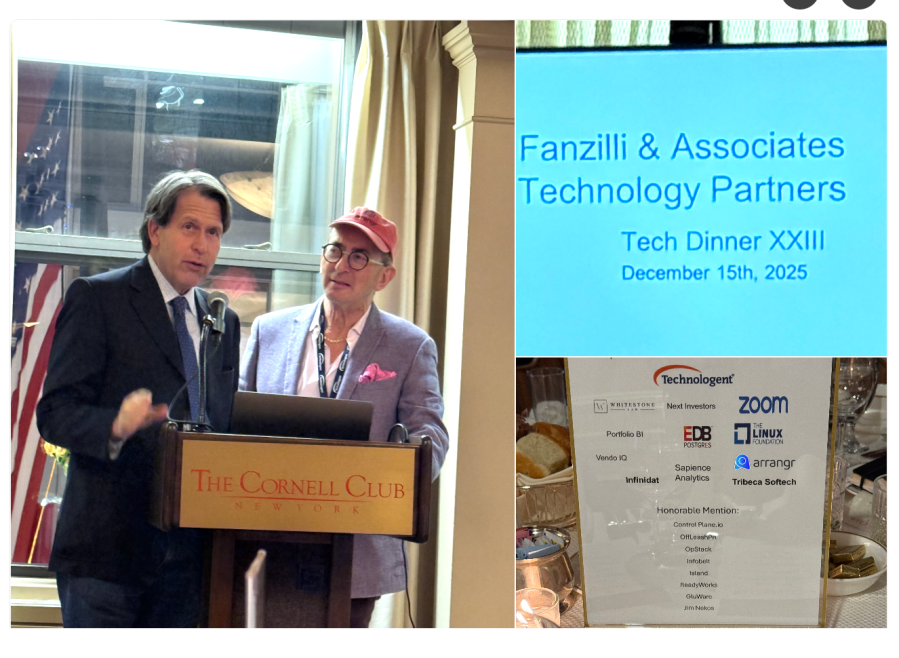
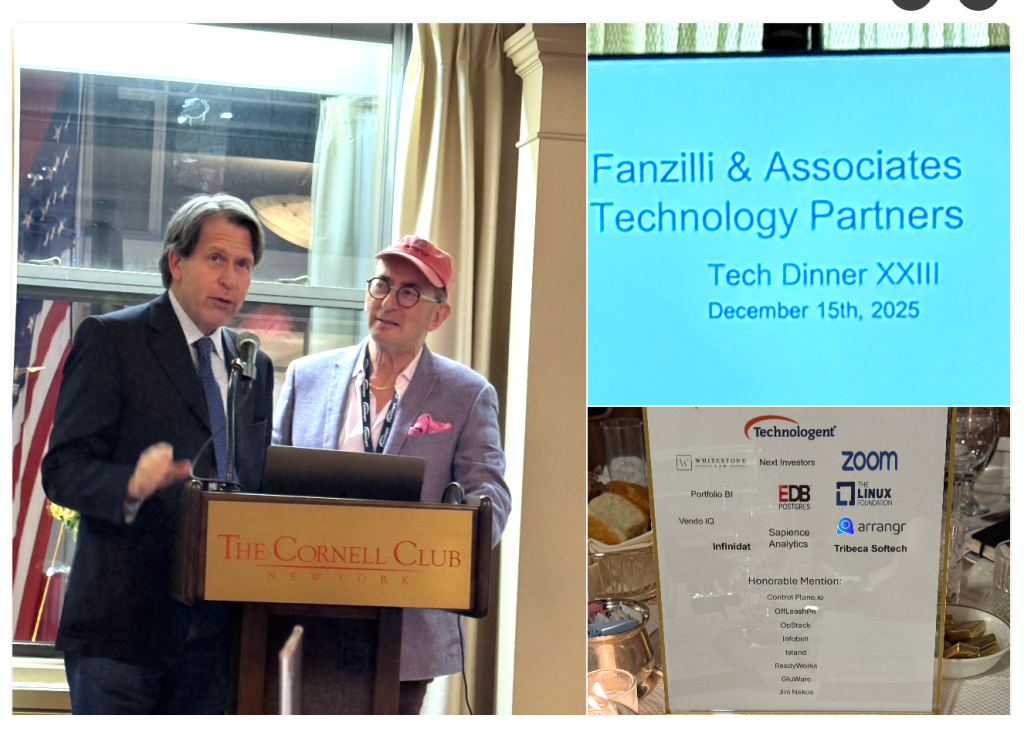
Arrangr was honored to present at the 23rd Annual Technology Partners Dinner, hosted by Frank Fanzilli & Associates, on Monday, December 15th, at the historic Cornell Club in New York City.
The evening consistently convenes senior leaders across enterprise technology, operations, and investment for candid, high-signal conversations. This year’s gathering emphasized substance over spectacle—focusing squarely on how organizations are navigating rising coordination costs, slower decision velocity, and the widening gap between the tools they own and the outcomes they need.
From Scheduling Tools to Intelligent Orchestration
Arrangr’s presentation centered on a challenge nearly every executive in the room recognized:
modern organizations are over-tooled, yet under-orchestrated.
Calendars, meeting links, CRMs, and collaboration platforms have multiplied—but meetings still stall, priorities collide, and momentum quietly decays. The issue is no longer booking time; it’s aligning urgency, priority, and people at scale.
Arrangr was positioned not as another scheduling layer, but as intelligent calendaringtm infrastructure—designed to actively manage priority, sequencing, and conflict resolution rather than forcing humans to do that work manually.
A Live Demo from Harry Moseley
A highlight of the evening was a live, on-stage demonstration led by Harry Moseley, former CIO of Zoom and an Arrangr executive advisor.
Harry walked the room through Arrangr’s patent-pending Prioritization feature, showing how meetings are no longer treated as equal blocks of time—but as intent-driven interactions with real business consequence.
The demo illustrated how Arrangr:
- Dynamically prioritizes meetings based on urgency and importance
- Applies intelligent bumping and rescheduling rules automatically
- Preserves high-value interactions without creating downstream chaos
- Encodes human decision logic directly into the calendar
Rather than reacting to conflicts after the fact, Arrangr resolves them proactively—before momentum is lost.
Calendars as a Leadership Surface
One theme resonated strongly throughout the room: calendars are no longer administrative artifacts—they are a leadership surface.
The discussion explored how intelligent calendaring enables organizations to:
- Reduce time-to-book and time-to-meet for critical decisions
- Protect executive and revenue-critical time without gatekeeping
- Maintain momentum across sales cycles, hiring, and strategy execution
- Turn scheduling from friction into a competitive advantage
Arrangr demonstrated how leadership intent can be embedded directly into how time is allocated—without adding burden to teams.
Strong Engagement, Strong Signal
The response from attendees reinforced that this is a shared pain point across industries. Executives, operators, and investors alike engaged in follow-up conversations around coordination cost, decision latency, and the hidden ROI lost to poorly orchestrated time.
The live demo, in particular, sparked discussion around how prioritization—not availability—is the missing layer in most scheduling systems today.
Looking Ahead
The Frank Fanzilli & Associates Technology Partners Dinner once again delivered what it does best: a forum for meaningful dialogue around where enterprise technology is heading—and what actually matters.
We’re grateful to Frank Fanzilli and his team for hosting another exceptional evening at the Cornell Club, and to Harry Moseley for demonstrating how intelligent calendaring can fundamentally change the way organizations operate.
The future of work won’t be won by adding more tools.
It will be won by orchestrating time intelligently.
 BLOG
BLOG 